THE KEY TAKEAWAYS
At a glance
- Change the cooking routine when there is a pattern of specific risks, not simply because of age or a diagnosis.
- Start with the least restrictive support that addresses the observed problem and review whether it works.
Observe what happens from start to finish
Look for a repeatable pattern: burned pots, an unattended stove, spoiled food, difficulty lifting hot cookware, missed steps or leaving appliances on. Fraser Health's dementia pathway identifies kitchen mishaps, functioning smoke detectors and spoiled food as household-safety concerns.
Ask the person what feels difficult. Vision, pain, fatigue, memory, grip strength and an unfamiliar appliance can require different solutions. Do not assume that one mistake means all cooking must stop.
Compare graduated options before removing independence
Choose the smallest change that addresses the actual risk and that the person accepts. Any decision to disable an appliance or restrict access should be handled respectfully, with consent and professional input when cognition or capacity is in question.
| Observed need | Possible support to discuss |
|---|---|
| Difficulty preparing ingredients | Pre-cut food or shared meal preparation |
| Forgetting a cooking step | Simple familiar recipes and supervised cooking |
| Unsafe lifting or reaching | Move supplies and use lighter cookware |
| Repeated unattended heat | Clinical review and a safer appliance plan |
| Meals no longer prepared reliably | Prepared meals plus regular check-ins |
Write a kitchen plan everyone can follow
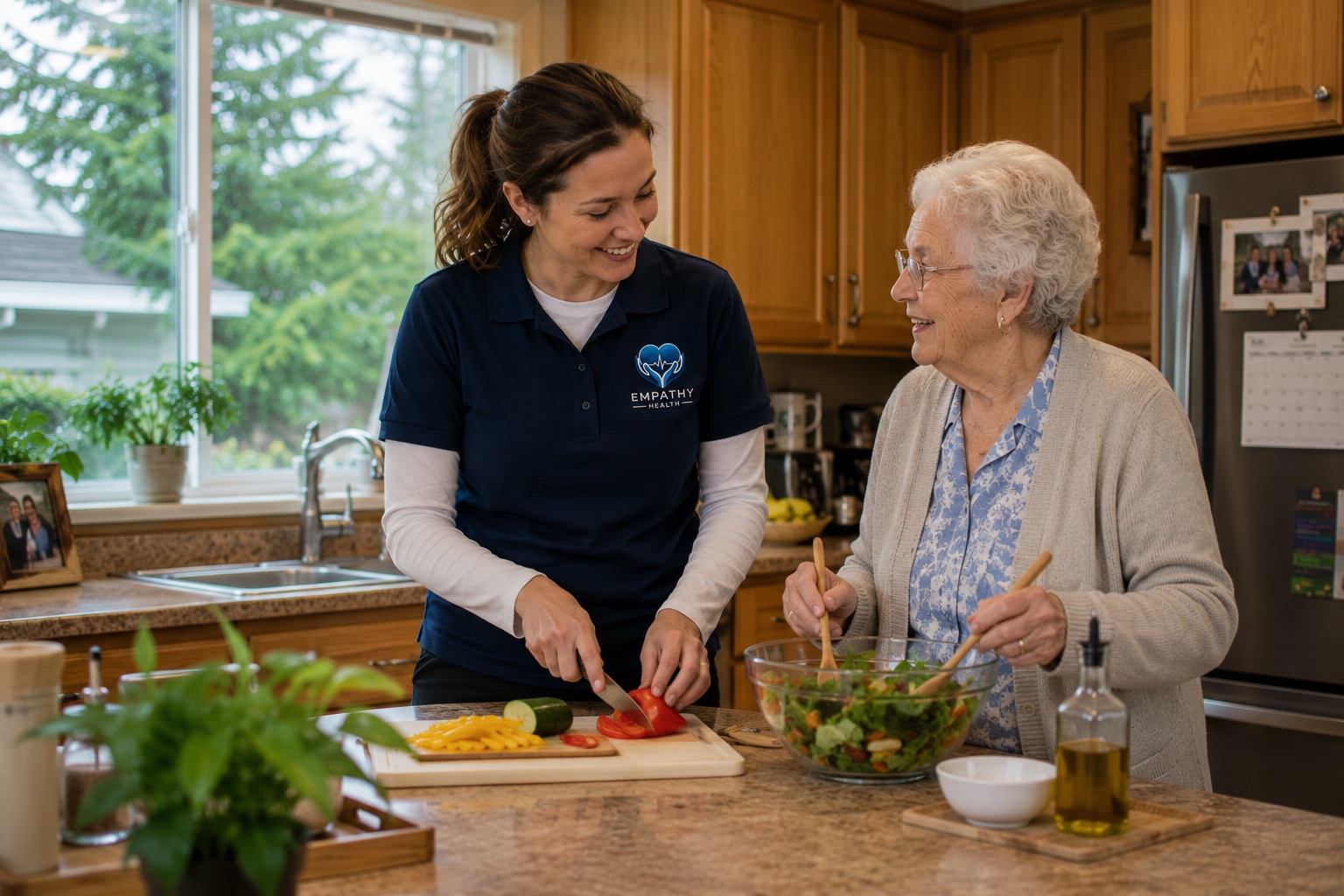
A caregiver can prepare meals, organize the kitchen and observe changes within the care plan. New confusion, a fire, a burn or another urgent incident needs the appropriate emergency or health response, not simply more meal preparation.
- List foods the person can prepare independently.
- Name tasks that require setup, supervision or full assistance.
- Confirm smoke alarms and a clear exit route.
- Record who checks groceries and refrigerated food.
- Set a review date after any new incident or health change.
Frequently asked questions
Is a stove shutoff device always the first answer?
No. It may be one option after the risk is understood, but the plan should fit the person's abilities, consent and home setup.
What if the person refuses help?
Discuss the specific concern and offer a limited, respectful option such as cooking together. Urgent danger requires an immediate safety response.
Sources and further reading
This guide draws on the following resources. Follow the links for the source organizations’ full guidance.