THE KEY TAKEAWAYS
At a glance
- Ask permission, offer choices and let the person do every step they can safely manage.
- Prepare the room and supplies first so the person stays warm, covered and never has to wait alone in an unsafe position.
Agree on the plan before clothing is removed
Ask when, where and how the person prefers to bathe and what help they want. HealthLink BC notes that frequency depends on the person's condition and wishes. A sink wash, shower or bed bath may be appropriate depending on mobility and clinical guidance.
Explain each step and pause for consent. If the person refuses, do not force the task. Check for pain, fear, temperature, fatigue, embarrassment or a misunderstanding, then try a different time or seek guidance from the care team.
Prepare privacy, warmth and safety
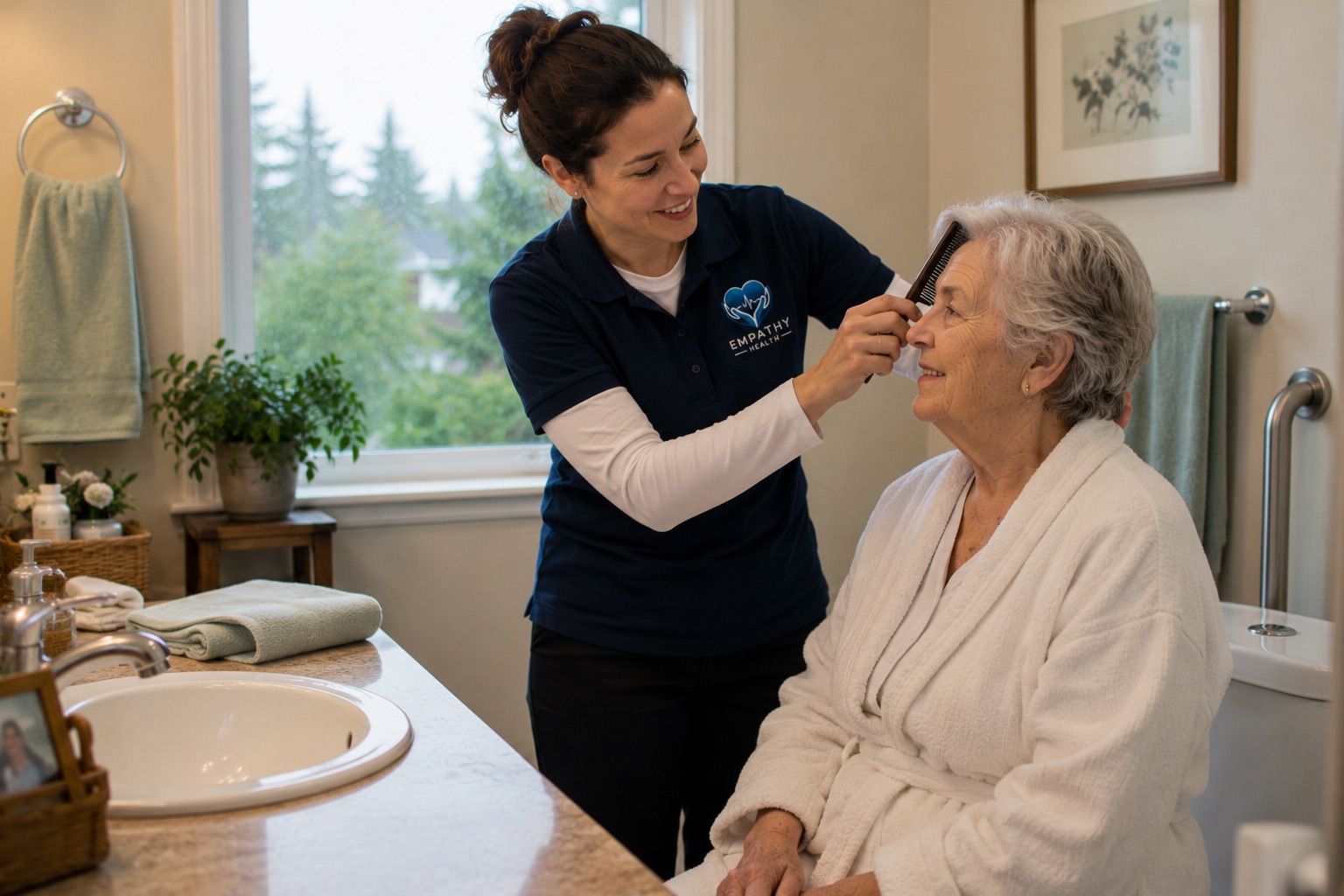
Gather towels, washcloths, soap, clean clothing and any approved equipment before starting. Warm the room, close doors and blinds, and cover areas not being washed.
Follow the assessed transfer and bathing method. A caregiver should not improvise with a grab bar, lift or shower chair. If the setup no longer feels safe, stop and request an occupational therapy or clinical review.
Observe skin and comfort without diagnosing
Bathing is an opportunity to notice redness, rashes, bruising, swelling or skin breakdown. Describe what you see, where it is and when it appeared, then report it according to the care plan.
Dry the skin carefully and use only agreed products. HealthLink BC advises unscented lotion for dry skin while avoiding areas that stay moist. Preserve the person's routines and modesty throughout.
Frequently asked questions
What if the person does not want a bath?
Pause and look for the reason. Offer choices or a partial wash, and involve the care team if refusal is new, persistent or linked to pain or confusion.
Can a caregiver choose new transfer equipment?
No. Equipment and transfer methods should be assessed and taught by a qualified professional.
Sources and further reading
This guide draws on the following resources. Follow the links for the source organizations’ full guidance.