THE KEY TAKEAWAYS
At a glance
- Match the option to the real barrier: shopping, cooking, appetite, memory, chewing, swallowing, loneliness or dietary restrictions.
- A delivered meal solves food access; in-home support can also help with choice, preparation, setup, observation and companionship.
Choose based on the barrier, not the label
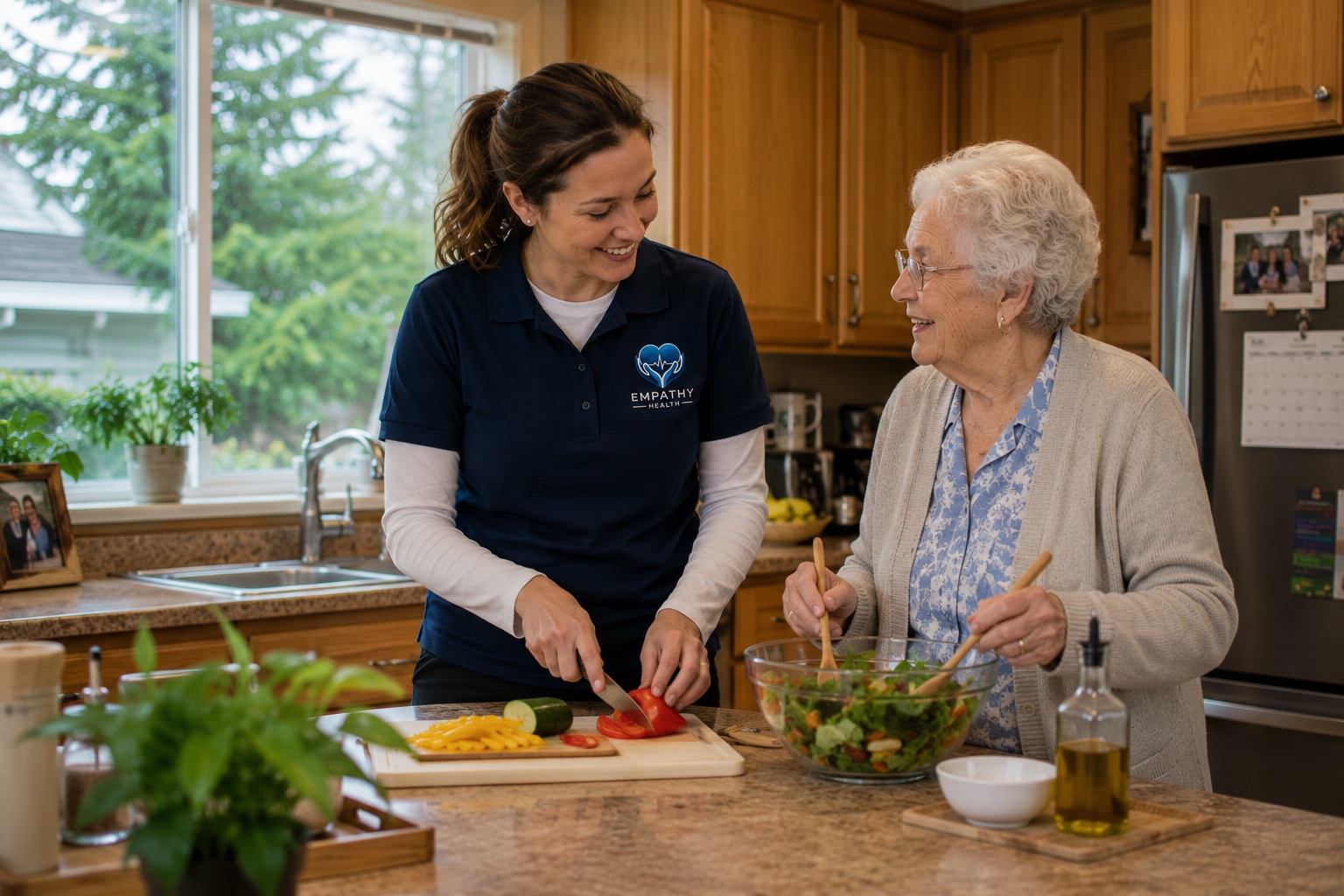
Meal delivery may fit when the main problem is obtaining a ready meal. Grocery support may fit when the person still enjoys cooking but cannot shop. In-home meal preparation may fit when food needs to match preferences, portions or a familiar routine. A shared meal may matter when isolation or low motivation affects eating.
Before deciding, check for chewing or swallowing difficulty, unintended weight loss, nausea, depression, food-safety problems or a prescribed diet. Those concerns may need clinical or dietitian advice.
Compare four practical options
| Option | Best fit | Question to ask |
|---|---|---|
| Delivered prepared meals | The person can safely store, reheat and eat the meal. | Will the menu and delivery schedule actually be used? |
| Grocery ordering or pickup help | Shopping is the barrier, but planning and cooking remain manageable. | Who checks the list, substitutions and food storage? |
| Batch preparation at home | Familiar meals and portions matter, and reheating is safe. | How will items be labelled, cooled and used? |
| Meal-time caregiver support | Setup, prompting, observation or company is the main need. | What should be recorded or reported after the meal? |
Run a one-week test
HealthLink BC suggests home delivery, community meal programs, family help and easier preparation methods when shopping or cooking is difficult. Better at Home services vary by community and may include grocery shopping; confirm local availability rather than assuming it.
- List seven likely meals and identify which step is difficult for each: planning, shopping, preparing, eating or cleaning up.
- Choose one primary option and one backup for days when delivery, family or appetite changes.
- Label prepared foods with the item and date; follow the household’s food-safety plan.
- Track what was actually eaten without pressuring the person or claiming calories were adequate.
- Review waste, enjoyment, independence and any health concerns after the week.
Keep clinical diets and swallowing plans intact
A caregiver can prepare food, organize groceries and support a meal according to the care plan. The caregiver should not change food texture for swallowing concerns, alter a therapeutic diet or promise nutritional outcomes.
Fraser Health Home and Community Care can connect eligible residents with nutrition and home-support services. Call 8-1-1 to speak with a dietitian or other health professional when individualized advice is needed.
Frequently asked questions
Is meal delivery always less supportive than in-home help?
No. It may be the simplest and most independent option when the person can safely manage storage, reheating and eating.
What if meals are arriving but not being eaten?
Check timing, taste, portions, opening and reheating ability, appetite and social factors. Persistent low intake or weight loss needs clinical follow-up.
Sources and further reading
This guide draws on the following resources. Follow the links for the source organizations’ full guidance.