THE KEY TAKEAWAYS
At a glance
How can a family prepare for a return home from hospital? Get the discharge team's written instructions, confirm the practical help and equipment needed, and organize the journey home and first visits. Build the household schedule around the treating team's directions, the person's preferences and the support that has actually been confirmed.
Bring household questions to the discharge conversation
A hospital discharge date gives families plenty to organize, especially when relatives live in different parts of the Lower Mainland. Start a shared list of questions and choose one family contact, with the patient's agreement, to keep track of answers. Tell the team about stairs, living alone or tasks the household is worried about managing.
HealthLink BC explains that discharge planning brings the patient, caregiver and discharge planner together to address care, equipment and travel arrangements. Describe what family members can realistically provide so the team can consider those circumstances when planning.
Keep the written instructions in one place
Before leaving, ask the treating team for clear written information about medication changes, follow-up appointments, activity, food, equipment and whom to contact with concerns. Ask them to explain anything unclear. The clinical team determines the health instructions for this person and this hospital stay.
Fraser Health describes the discharge summary as an important link between hospital and primary care teams. Ask where the patient should keep their copy and how follow-up information will reach the appropriate clinicians. Give home support providers the relevant instructions they need, with the patient's consent.
Walk through the route from the entrance to the bedroom
Think about the actual arrival. Where can the vehicle stop? Is a building entry code needed? Who will open the door and bring in the overnight bag? In a Vancouver apartment, confirm elevator access and make sure the arriving person can reach the rooms they will use without moving boxes or furniture on the day.
HealthLink BC identifies household trip hazards and poor lighting as fall risks. Check the entrance and indoor paths for loose items and make lighting easy to reach. Ask the treating team or occupational therapist about individual equipment needs and its correct use.
Confirm the journey and the first few hours
- Write down the pickup contact, pickup location and how the family will receive an updated departure time.
- Ask the hospital team what travel arrangements and assistance are appropriate for the person.
- Choose who will carry belongings, unlock the home and stay for the arrival period.
- Confirm who will collect the prescribed items or supplies identified by the treating team.
- Prepare familiar food that follows the person's discharge instructions and preferences.
- Keep the person's glasses, hearing aids, phone and everyday essentials in a convenient, agreed place.
Give each practical task an owner
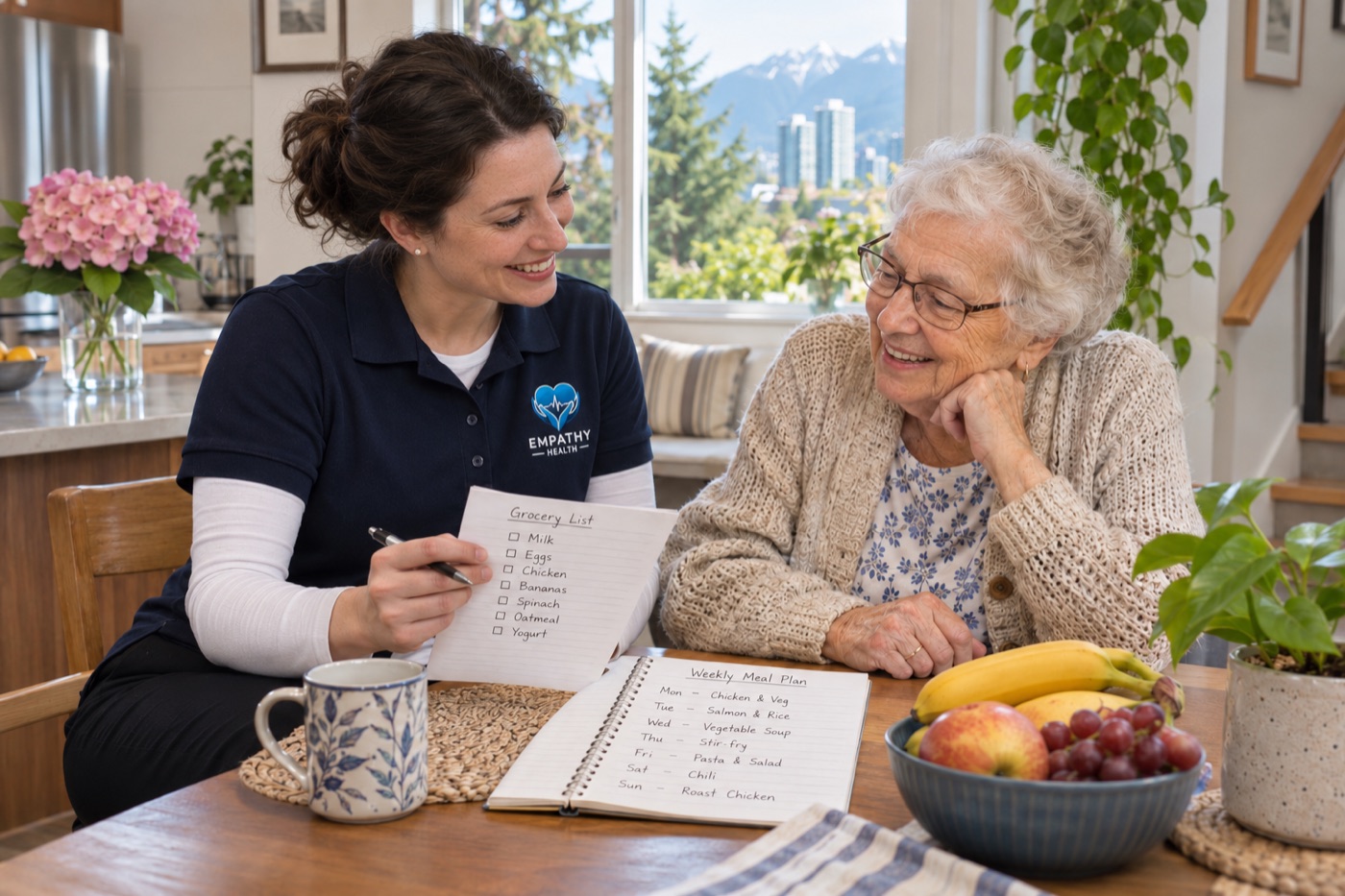
Use a simple calendar for meals, household help, companionship and any personal care assistance that has been agreed. Name the person covering each task and record their contact number. Keep requested services marked as pending until the provider confirms the start date and visit time.
A relative in Coquitlam might prepare food for the first evening while another family member handles the follow-up appointment arrangements. If paid support is part of the plan, tell the coordinator about the other confirmed help. Ask how updates should be shared and who to contact when the household needs change.
Discuss the non-clinical support needed at home
Empathy Health can discuss hospital discharge home support for personal care, meal preparation, light housekeeping, companionship and medication reminders within an agreed plan. We prioritize caregiver continuity. Describe the person's routine, relevant written instructions and the parts of the day when your family needs help, then confirm suitable tasks and availability.
Nursing procedures, medication decisions and prescribed rehabilitation require the appropriate health professionals. Ask the discharge team how those needs will be arranged. Share their instructions with everyone providing relevant assistance so the household has a consistent, current reference.
Review the household arrangements after the return
Choose a time to check how the practical plan is working. Ask the person whether they can find what they need, whether visits fit their day and which tasks still feel difficult. Update the calendar and contact list as arrangements are confirmed. Keep a brief list of questions for the next conversation with the treating team.
Use the discharge instructions to identify whom to contact about health concerns and when to seek urgent help. In a medical emergency, call 9-1-1. For general health advice in BC, HealthLink BC is available through 8-1-1.
Frequently asked questions
When should we discuss help at home with the hospital team?
Raise practical concerns during discharge planning, including stairs, time alone and the assistance family members can provide. Ask the team to explain the proposed arrangements and identify any support or equipment that needs to be confirmed before the person returns.
Can a home support caregiver decide when to change medication or exercise?
Medication decisions and rehabilitation directions come from the treating professionals. Share their current written instructions when arranging practical support and ask the appropriate clinician to clarify changes. Empathy Health can discuss medication reminders within the agreed non-clinical care plan.
Sources and further reading
This guide draws on the following resources. Follow the links for the source organizations’ full guidance.